
Showing posts with label circus wagon. Show all posts
Showing posts with label circus wagon. Show all posts
Sunday, January 11, 2026

Wednesday, August 27, 2025
You're likely to be familiar with "American Gothic" but have you seen the other interesting paintings that Grant Wood (1891-1941) made? Or heard of the ice wagons?

Grant Wood, Death on Ridge Road, 1935
As automobiles became more prevalent in the 1930s, so did car accidents. Ridge Road outside of Stone City was notoriously dangerous. The scene here closely resembles Jay Sigmund’s accident while traveling to visit Wood at the Stone City Arts Colony in 1933.
Shortly after his car wreck, Sigmund penned the poem Death Rides a Rubber-Shod Horse.

In 1934, Wood was hired as the head of Iowa’s Works Progress Administration (WPA)


For the state of Iowa, Grant Wood was the director, and he developed a team of artists who he felt were best qualified to paint the murals for Iowa State. He hired Christian Petersen, not to work on the library murals, but to carry out the commission Petersen had already obtained from President Hughes.
The PWAP lasted only a little over four months and employed only about 30 Iowa artists. Each artist was paid about $25 a week and most of them did not work for the entire life of the Project. Most of the artists who produced work for Iowa State did, however, maintain their PWAP employment over the four months. A few of them even continued working after their funding was guaranteed, so sincere was their zeal to complete the art they had started.
The PWAP lasted only a little over four months and employed only about 30 Iowa artists. Each artist was paid about $25 a week and most of them did not work for the entire life of the Project. Most of the artists who produced work for Iowa State did, however, maintain their PWAP employment over the four months. A few of them even continued working after their funding was guaranteed, so sincere was their zeal to complete the art they had started.
Wood borrowed his theme for When Tillage Begins, Other Arts Follow from a speech on agriculture delivered by Daniel Webster in 1840 at the State House in Boston.
Webster said, "When tillage begins, other arts follow. The farmers therefore are the founders of human civilization."
Wood had planned to create 17 mural panels for the library, but only 12 were completed. The panels were devoted to agriculture, mechanics and home economics.

In 1932, Wood helped establish the summer activity, Stone City Arts Colony
Inspired by prominent artist colonies in Santa Fe, New Mexico, and Woodstock, New York, they leased 10 acres of idyllic Iowa farmland.
Archives of American Art called it a place where artists could “study together, work together, and play together.” Many colony residents lived in old ice wagons, some of which they painted with as much care as was given to any canvas.
It lasted only two summers due to financial challenges.
The tuition and room and board collected from students fell far short of paying the colony’s outstanding bills, and the colony ended its 1933 session in debt by almost $1,500.65 Ultimately, with the help of a grant from the Carnegie Corporation—a grant originally meant for the colony’s purchase of the Green estate in 1933—and the personal wealth of one of Wood’s friends, John C. Reid, the debts were eventually settled a year later.

This is Grant Wood, putting the finishing touches on his ice wagon painting, the scene includes mountains, streams, deer, and an Indian standing on one summit peering into the distance
Wood was no stranger to living like a gypsy, because he'd left he family farm at age 10, and had been a soldier in the Army in WW1.


To proclaim its discovery of a troop of artists camped out on an Iowa hillside in the summer of 1932, the Christian Science Monitor focused on the colony’s housing challenges
Indeed, housing for the hundred or so colony participants was in short supply in the tiny village. The bulk of the colony was located near the crest of a hill overlooking the village as it straddles the Wapsipinicon River.
There the colonists planted their artistic flag on the former estate owned by nineteenth-century quarrying mogul John Aloysius Green. The sturdy stone buildings Green left behind—an ice house, barn, water tower, and, most elaborate of all, the “Green mansion” itself—served as a combination of studio, gallery, and instructional and living space.
In the large Green mansion, female colonists roomed on the second floor, while male colonists bunked upstairs in the attic. The men who did not fit in the attic or could not afford the rooming costs pitched camp nearby in tents, or— as its most famous resident, Grant Wood, did—in old ice wagons hauled from Cedar Rapids to serve as temporary shelter.
Grant Wood, the Iowa-born artist who just two years earlier had made a name for himself with his now famous work, American Gothic, was the faculty director in 1932 and lived in one of ten ice wagons high above the village.
Helping to shape the Christian Science Monitor’s portrayal of the encampment as a gypsy caravan, Wood painted the outside of his wagon with a sweeping pastoral landscape in what would become his familiar style—fantastical scenes of sensually curving hillsides and farmscapes done in sharp, clearly defined lines. The other ice wagon residents followed suit


https://www.journals.uchicago.edu/doi/abs/10.1086/quarbullarchamer.3.4.1556810?journalCode=quarbullarchamer
FYI, Wood posed his sister and his Cedar Rapids dentist as the dour-faced figures in American Gothic
Sunday, April 20, 2025
Three circus elephants pull a semi-truck across a field in Cedar City, Missouri

Sunday, March 17, 2024

Friday, December 15, 2023
I have found and posted some pretty fantastical vehicles that were made by carnival troupes, Burning Man creators, etc, but this might top the all... the Gremlins Traveling Show parade float
The Gremlins Carnival Club from Bridgewater, this float is named the Traveling Show
this and about 8 other themed parade floats compete in seven of the Somerset County Guy Fawkes Carnival Processions, in England, over the course of 7 consecutive nights, so each town gets a nice long look at the procession
The parade always starts in Bridgwater but will also travel to North Petherton, Burnham-on-Sea, Glastonbury, Wells Shepton Mallet and Weston-super-Mare. The series of parades in each town now form a major regional festival.
Thursday, September 15, 2022

Thursday, August 04, 2022




Sunday, June 02, 2019


Wednesday, April 24, 2019
With a name as distinct as Rolly Crump, you either remember the name, or just haven't heard it yet. He is one of the last original Imagineers and architects of Disney World, and of the Disney marquee at the 1964 World’s Fair

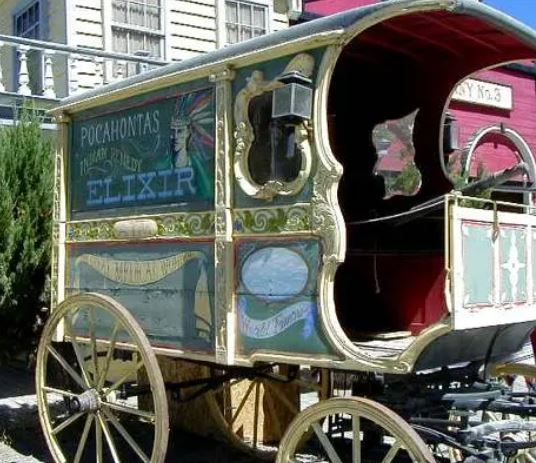
this is the famous Gypsy Cart designed by Crump, and made by Thomas Kuntz @haxanthrobo with the help of @horriblyeclectic who made and hand painted the banners and tent for it, based on Crump's original drawing from the late 60s

He started as an assistant animator in the Disney films “Lady and the Tramp” and “Sleeping Beauty,”
the became an imagineer, and helped design the rides at Disney World, helped develop Walt Disney’s World’s Epcot, worked out effects for the Haunted Mansion with Disney’s master illusionist Yale Gracey, and worked on It’s a Small World Disney marquee for the 1964 World’s Fair. That's right, he built an exhibit draw (if that's the right word) for the last well known Worlds Fair!

He also designed the tiki gods and goddesses for the Enchanted Tiki Room.

and was a key architect in the 1967 Tomorrowland redesign

https://www.latimes.com/entertainment/herocomplex/la-et-ms-rolly-crump-20180907-story.html
https://www.toopics.com/p/1994717562282638360_1593669963


Subscribe to:
Posts (Atom)