they publish 3 times a year, are well worth the cost, and if you subscribe right away, you'll get this as your first issue "Subscriptions are currently open, $54 dollars Americanm $60 Australian, and will start with issue #19. All subs will mail out onTuesday 24th March from our Melbourne and Detroit offices, after which subscriptions will then change to start with issue #20 "
or check the list of stores and shops that now carry Fuel Magazine http://fuelzine.com/stockists/ as they will have this new issue on March 30th
And instead of waiting for some yankee to try and create a real one, Nicko (Smoked Garage) got things in order, and had Gus Wi fabricate it cool bike fairing around a Kawaskai that got some mods
Full article and some more images at Fuel Magazine issue 20
Fighting strong competition from Volkswagen for the lucrative small-car market, the Ford Motor Company rushed the Pinto into production in much less than the usual time.
Ford engineers discovered in pre-production crash tests that rear-end collisions would rupture the Pinto’s fuel system extremely easily.
Because assembly-line machinery was already tooled when engineers found this defect, top Ford officials decided to manufacture the car anyway—exploding gas tank and all—even though Ford owned the patent on a much safer gas tank. But that tank would have changed the design of the trunk space, reducing it, and trunk space was a sales point.
Internal company documents in our possession show that Ford has crash-tested the Pinto at a top-secret site more than 40 times and that every test made at over 25 mph without special structural alteration of the car has resulted in a ruptured fuel tank. Despite this, Ford officials denied under oath having crash-tested the Pinto.
cost-benefit analysis argued that Ford should not make an $11-per-car improvement that would prevent 180 fiery deaths a year.
Ford’s cost-benefit table is buried in a seven-page company memorandum entitled “Fatalities Associated with Crash-Induced Fuel Leakage and Fires.” The memo argues that there is no financial benefit in complying with proposed safety standards that would admittedly result in fewer auto fires, fewer burn deaths and fewer burn injuries.
When the Pinto liability suits began, Ford strategy was to go to a jury. Confident it could hide the Pinto crash tests, Ford thought that juries of solid American registered voters would buy the industry doctrine that drivers, not cars, cause accidents. It didn’t work.
Ford lost a court case in 1977 for 125 million dollars (which was reduced to 3.5 million later) to Richard Grimshaw. That's when it decided that going forward, it would settle instead of go to court
The issue of fuel tank safety hasn’t been eliminated in the years since Pinto Madness was published, either. The side-saddle fuel tank design used in full-size GM pickups from 1973 to 1987 was found to be the cause of over 2,000 deaths through 2009, some 20 times more than those ultimately killed in Ford Pinto fires. Despite the deaths and numerous lawsuits, GM has steadfastly denied that a problem with the design exists, and no recall was ever issued.
Chrysler faced its own fuel-tank fire crisis with the 1993-’98 Jeep Grand Cherokee and 2002-’07 Jeep Liberty, repaired (via a voluntary recall) by the installation of a trailer hitch at no charge to owners. Even Ford failed to learn a lesson from the Pinto, positioning the fuel tank in its Crown Victoria between the axle and the bumper, resulting in a series of fires particularly in cars modified for law enforcement duty.
From the refinery into your engine, street gas only “lives” about 30 days.
(that's how long it's around before your car uses it up)
But thanks to purer components and specific additives to extend shelf life, quality race fuels like Rockett Brand can stay potent for several race seasons.
But fuels have to be stored the right way—if you’ve ever unscrewed the cap on a fuel can that sat in the sun, you’ve heard the hiss of gas escaping.
This “weathering” is the loss of the fuel’s light ends through evaporation—the lighter hydrocarbons are escaping.
So to prevent your fuel from weathering, do the following:
• Keep fuel in a metal container: light deteriorates fuel, so this is the best way
• If you must keep it in a plastic container, make sure it’s dark colored
• Ensure that the container’s O-ring seals properly, and isn’t damaged or brittle
• Keep the jug’s caps and vent caps tight: they’re there to prevent massive vapor buildup, but keeping them closed tight won’t allow evaporation to break down your fuel
• Store your fuel containers in a cool place, away from sunlight
This backs up what I said, gas stays fine for about 4 - 6 months without any noticeable loss of performance if your car is garaged, or not going through extremes of climate change.
Turbonique was founded in the '50s by Gene Middlebrooks of Orlando, Florida. A former aerospace engineer, Middlebrooks believed that microturbine engines could replace piston engines in drag racing and many industrial and recreational applications. In a 1967 Turbonique catalog, he wrote, "Turbonique's goal of stripping the military price tag from power turbines has at last become a reality through the introduction of the low-cost microturbine."
So what is a microturbine? Simply stated, it's a small version of a gas turbine with one major difference: special Thermolene monopropellant fuel. The term monopropellant describes a fuel that will ignite and burn without the presence of atmospheric oxygen. As a point of comparison, the nitromethane used in Top Fuel dragsters is a semi-monopropellant. It requires a little outside oxygen for complete combustion, but only a small fraction of what is required to burn gasoline, alcohol, or kerosene. Most gas turbines run on petroleum-based fuels that require plenty of air to support combustion. They take in atmospheric air at the front and compress it to a high temperature and pressure. Fuel is then sprayed into this hot air, which ignites, creating the high-pressure gases that drive the turbine wheel and make torque. The problem is that a typical air-breathing gas turbine uses over half of its total turbine power to drive the compressor. Turbonique engineers sidestepped the problem and simply replaced the weighty, expensive, and inefficient compressor with a high-pressure storage bottle containing Normal Propyl Nitrate (Thermolene), a stable, milk-white liquid fuel that brings its own oxygen to the party and that moves the engine into the category of a rocket because it can run without the benefit of atmospheric oxygen. When the Thermolene is introduced to the combustion chamber at 600 psi and ignited by a glorified spark plug connected to an on/off switch, the immediate result is an intense release of hot gases to spin the turbine blades. Anti-swirl turbine wheel vanes prevented flames from exiting the tailpipe, but a special wheel was optional for "spectacular flaming night runs."
Marketed as Thermolene and sold for $3.50 per gallon in 1967, the catalog states that "Normal Propyl Nitrate was selected as the preferred fuel because it is easily ignited, clean burning, and relatively inexpensive. Further, it is compatible with most metals, storable for indefinite periods, and the cautions to be observed are no more involved than those ordinarily followed while handling other fuels such as high-octane gasoline." And according to the catalog, the exhaust plume was "no more toxic than ordinary automobile exhaust." By utilizing this monopropellant to fuel its little monsters, Turbonique wound up with a very compact, light engine with an ability to deliver incredible power for brief intervals.
But as many users quickly discovered, there was too much power. Extreme tire spin (even on the best slicks of the day) made Drag Axle-equipped cars difficult to control. Full-quarter-mile smoke shows
with impressive trap speeds, but mediocre elapsed times were the rule, not the exception.
Turbonique Drag Axles were available with or without a one-way Borg-Warner sprag clutch to automatically disengage the microturbine when not in use for normal axle operation. Prices for sprag-equipped units ranged from $2,430 for model TB-28-C (raw castings with complete blueprints for machining), $3,225 for model TB-28-B (same as TB-28-C but including all needed hardware) and $4,695 for model TB-28-A (factory assembled and ready to run)
Around 1919, the 10-year-old Beatrice grew tired of being left behind by her sisters on cycling trips and began to save for a motorcycle. Aged 12, she built a working Meccano model spinning wheel and promptly won a national competition set by Meccano Magazine.
By the age of 14, she’d achieved her goal, her chosen bike a two-stroke Royal Enfield. When she wasn’t giving her sister Anne pillion rides, she was taking it to bits and putting it back together again, engine and all.
the Women’s Engineering Society. It was borne, in 1919, out of the need to protect the right to work of women who had been allowed to work in arms manufacture and other engineering trades during World War I.
In May 1926, the Society distributed a letter to girls schools throughout the country. Shilling’s mother convinced her to reply. By age 17, she became an apprentice electrical engineer learning the ropes, or more accurately cables, in the new electrical power plant at Bungay, Suffolk.
With support from the Women’s Engineering Society, Shilling joined the Department of Electrical Engineering at the Victoria University of Manchester in October 1929. She was one of only two women accepted that year; up from the none that had been accepted before.
Shilling received her Master of Science in 1933, and promptly joined a lecturer, Dr G.F. Mucklow, in researching fuel consumption, heat loss, and supercharger performance in Rolls-Royce and Napier single cylinder engines.
Shilling would go on to set the record for the fastest woman to lap the circuit at 106 mph, in 1934. Her record stands today.
Shilling was fast for several reasons. Her size was one advantage. At five feet tall, she was short enough to lie more or less flat, reducing drag. And though history doesn’t record all the specifics of the tweaks and modifications Shilling made to her machine, they were numerous. Freudenberg indicates that, in later letters to friends, she experimented with the length of inlet tract. This is the part of the engine that supplies the potent mixture of air and fuel to the cylinders, its length affecting power, torque, and fuel efficiency.
In 1938 and 1939, the Norton motorbike was rebuilt from scratch with a homemade supercharger, and a new fuel tank where the saddle once was. Unfortunately, Shilling was too short to ride it. By then she was married, and her husband George Naylor, who stood a whole foot taller, took to racing instead. He became an able rider with the help of Shilling’s coaching, which was certainly unique: when they married in 1938, it had been on the condition that Naylor first earn himself a Brooklands Gold Star. It came in the nick of time. Racing at Brooklands ended forever in 1939.
Her husband went on to fly Lancaster bombers during World War II,
By November 1939, after a series of promotions, she had reached the position of Technical Officer in charge of carburettor research and development work. In other words, she was perfectly positioned to tackle the skittish Merlin engines of the Hurricane and the Spitfire.
In lieu of a fix, pilots had devised their own workarounds: dramatic maneuvers deployed if and when the engine cut out.
Tests ordered and overseen by Shilling identified the true problem: the rich cut that followed the weak cut addressed by Lovesey and Fisher.
Shilling worked out the precise volume and pressure of fuel being pumped into the chamber by the Merlin engine and designed a brass restrictor with a hole precisely the diameter needed to allow maximum flow of fuel, and therefore maximum power, without flooding the engine. Crucially, Shilling’s solution could be fitted without the removal of the carburettor, so the fix could be made in situ at operational airfields.
This left only the logistical problem of how to get the restrictors to Fighter Command airfields in good time. Shilling organized a small band of engineers to assist, though inevitably she travelled up and down the country solo, and by her preferred mode of travel: her trusty Norton motorcycle.
Years later, Keith Maddock, chief engineer at Hangar 42, an RAF base during the war, went so far as to describe the restrictor as a war-winning modification. “Beatrice Shilling helped us to win World War II—of that there is no doubt,” he told the BBC in 2017. Her war efforts weren’t limited to improvements to the Merlin engine. She also contributed to a range of engines to improve starting in freezing conditions, and operation at higher altitudes.
Her technical knowledge was very possibly unsurpassed. If nothing else, she was eventually awarded the Order of the British Empire for her wartime efforts.
In 1955, she was promoted to be the Royal Aircraft Establishment’s Senior Principal Scientific Officer.
Gotta hand it to editor Luke Ray and his photography... awesome magazine with a superb layout http://www.fuelzine.com/the-fuel-tank/beta-issue is the beta test and it's a flip style page turner like Flikr, you just look for the arrow on the right hand side in the middle of your screen
$65 a year for a subscription, or $20 an issue at a magazine stand, but hit their store, and get 2 for $12 if you want issues 3 and 4, or 5 and 6. Or kill it and get 3, 4, 5, and 6 for $20 !
To tell you what it's like, I have to refer to a couple of magazines you might be familiar with, so, if you're not, I don't know how to describe this clearly. But if you've had an issue of Rodders Journal, or Street Rodder Premier, then you're getting the idea. BUT, Wheel Hub isn't as limited in the type of cars it features.
It's not JUST roadsters, hot rods, or street rods. It's those PLUS new cool stuff, like the 67 Coronet R/T built by Kindig Designs, and other cars that I've posted that I found at SEMA
This magazine is going to please you, and you'll know you got your money's worth, then you'll have to keep your buddies from grabbing it and taking off with it.
It's seriously NICE, like Rodders Journal. It just won the Printing Industries of America's Premier Print Award, which selects the highest quality printed pieces from around the world that exhibits truly superior print quality and exceptional craftsmanship. To earn this honor, Wheel Hub beat out 2,240 other entries.
Created and made in the USA, by just 3 guys who aren't sponsored, connected to, nor working for some corporation that calls the shots. They made this the hard way, even creating their own distribution.
So, if you admire the hard working guys who put out an amazing magazine, like Sunday Slacker, Fuel, and Rodders Journal, and already know what amazing quality that results in, you're gonna like this magazine
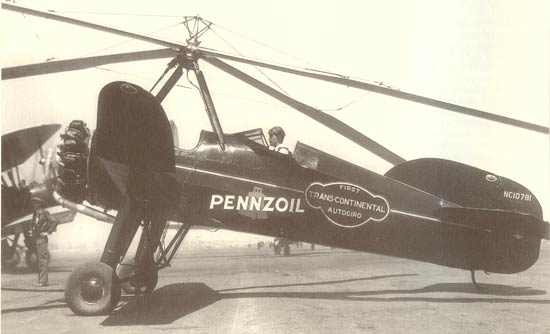
Miller, by 1931 with a mechanical engineering education at Pratt Institute of Technology, Class of 1927, and seven years of flying experience, had become the first individual to purchase a PCA-2 for a cash price of the then sizable $15,000 plus "a little extra for an auxiliary fuel tanks and emergency flare racks for night flying."24 Upon ordering he had been informed that he would receive production model C/n B-12 in April 1931, by which it was anticipated the ATC would be granted (it was on April 2, 1931), a delivery date later postponed to May. At the time of his order, C/n 13 was in the production line, but no order had yet been received.25 Upon receiving confirmation of his PCA-2 order, Miller immediately began planning a transcontinental trip,26 a daring undertaking as no one had previously attempted such a long flight.27 It should be remembered that there were no established radio communication or navigation aides, neither established routes or traffic control and little available weather information other than often inadequate and infrequent advisories for a few frequent areas. That data which pilots now take for granted, weather fronts, air mass, wind conditions, route charts – all were in the future. Miller and other pilots flew with dated Rand McNally state maps and, if lucky, a few "strip" charts printed by the Army Air Service between their fields. And to top it off, Miller had to avoid rain as it would quickly imperil his life in cutting through the rotor blade fabric. This flight was to be in conjunction with a series of exhibition flights – and he kept sales and production officials, including Edwin T. Asplundh, fully informed of the flight plans.
Miller was understandably surprised when, in early May, he read in the New York Times of Beech-Nut’s intent to sponsor Amelia Earhart’s transcontinental flight! Flying to the Pitcairn Willow Grove field, he quickly discovered that the company had inserted Beech-Nut’s order ahead of his and that he was now to receive C/n B-13 (NC10781). This was clearly an attempt by the company to facilitate Earhart’s flight as the Beech-Nut order had been placed after Miller’s, and he later claimed that "the mechanics and the test pilots leaked the information to me that the sales manager had decided that he would rather have Earhart make the first transcontinental flight for better publicity coverage."28 Miller knew that he was merely regarded as an "unknown professional pilot without such publicity as Beech-Nut could provide" and also learned from the Pitcairn company pilots that Earhart’s final check ride was being delayed until her aircraft could be finished. Miller also later claimed that he spoke with Earhart several times while at the Pitcairn factory and that "she told them that she was not interested in all the aerodynamics and short landing procedures" but "she just wanted to fly it across the continent and then fly around the country for a Beech-Nut advertising campaign."29 So Miller resorted to subterfuge in the face of the company manipulation and announced that "if Amelia wants to make the flight she is welcome to it" but that he had to be in Omaha for the Air Races by May 17 or he would suffer a financial loss. He took a room at a local nearby tourist home and while waiting to take delivery of his Autogiro, received a check ride in the experimental PCA-1B, known as the "Black Maria" (X96N),30 by factory test pilot ‘Skip’ Lukens. Lukens took Miller on a single checkout ride, as he had previously done with Earhart, with five checkout practice landings – after that, Miller was given use of the Black Maria for practice during May 9 – 12, 1931 – he made 110 practice landings with a total of 5.5 hours of flying logged. This averaged out to flights of about 3 minutes along with practice in low cloud banks with the turn indicator. Finally, on May 14, 1931, he took delivery of his Autogiro, which he would name, presumably after the David Ingalls article31 in the March 31, 1931 issue of Fortune Magazine, the "Missing Link.". After five short test hops, Miller promptly left and headed west in PCA-2 NC10781.32
Miller was an experienced professional and aerobatic pilot and had gained extensive knowledge of the aerodynamics of the Autogiro from conversations with pilots Jim Ray, Skip Lukens, Jim Faulkner, and Pitcairn chief engineer Agnew Larsen. He would need all of his abilities for the trip west. While the normal cruising speed of the "Missing Link" was 100 mph, Miller flew at 90 mph to conserve fuel and break in the new engine. The Wright R-975-E, 330 hp, air-cooled radial engine consumed 18 gallons/hour, so Miller could only fly for three hours at which point he would only have 15 minutes of flying time on his fuel reserve. Navigation was by magnetic compass, following landmarks such as rivers or roads, and the pilot hoped that when a landing had to be made, there would be an airfield where the Rand McNally road maps showed one – it was not always the case. Miller discovered this at the end of the second day, during which he flew from Harrisburg to Chicago. He had flown seven hops, 11.3 hours over a route he had never flown before, aiming to land at Maywood Air Mail Field – but that airfield had been abandoned, and its replacement, later known as Midway Airport, was not yet finished or marked on the maps. Miller arrived at the site of the older field after dark and, after a perfect landing, located the new field, to which he immediately flew as he would have to refuel before continuing on. He napped on a workbench and, after refueling, left for Omaha at first light. He hadn’t even eaten. He then flew an additional seven hops, 7.2 hours flying and, after arriving at the site of the Omaha Air Races, flew an additional two hours and made 14 demonstration flights after arrival.
Miller remained in Omaha from May 16th until the 19th, and then left for San Diego. Headwinds kept him from reaching Clovis, NM on May 26th so he landed en route and installed extra fuel tanks on the front seat during the night. The next day he reached the NM town but encountered strong headwinds on the way to El Paso, which consumed extra fuel forcing him to land 18 miles short of his destination to add fuel. On May 28th he began the last leg of the journey from Lordsburg, NM before first light and, after flying 4 hops for 8.9 hours, landed at North Island Naval Air Station, San Diego, CA. The first Autogiro transcontinental flight had taken a total flying time of 43.8 hours and was without mechanical incident. The aircraft had performed flawlessly with the most difficult task for Miller seemingly to get used to the shadows of the blades passing over his head, and the severe sunburn he incurred.
I posted about the upper left issue before, that cover is just the most dead on hot rod motif... flames outlined in pinstripes, with gold leaf lettering. The issues 3 and 4 are on the left, #8 is the one on the right
But this cover, art by Max Grundy, is a must buy... it's the coverage of Luke's trip to California, and he got to use the E-Max Challenger from Hotchkis for a day, among other things.. so lucky!
But I don't believe they will ever change my favorite from
Because the photo of the flame job outlined in pinstripes, covered with the logo in gold leaf, with the offside shadow.. that is essential hot rod car stuff.
Steve Coonan. I'm surprised his name isn't as well known in current hot rod photography as Gewertz, Furman, Marjorham, Chen, and Jackson
The magazine is Rodders Journal, and I just read a cool article at Fuel Curve.com about Steve Coonan that explains what it took to get from a guy working for other magazines, like American Rodder, Hot Rod, etc to creating the new best of the best car magazine, Rodders Journal in 1994
and I was inspired to leave my comment after reading what a couple dozen others had written.
Here's my take on the cool article Stance Is Everything wrote:
Damn glad to read your thoughts, and your analysis of the print killed by blog, killed by instagram is well done. A clear look and grasp of the big picture. Advertorial... Ha! Yeah, magazines did well for a long time on free products to improve the shop rod while writing articles on the newest carb, cam, trans etc etc. No one since has gotten that schwag thrown their way. Oh, some have scored rain x, floor mats, etc whatever, but the magazines really raked it in. Magazines sure have died and went away in the past decade though, and I am sure it's due to the birth of the websites, cell phone cams, etc. Though only a teenager (the internet is what, 19 years old?) it's toppling of the old regime is mighty. The new talent that has grown and created good new stuff like Bring A Trailer, Petrolicious, etc has far eclipsed the previous medium for specific services or great content. HAMB, Hooniverse, Jalopnik, Bangshift and others sure swooped in and took a lead. Also, blogs and websites bloomed and withered with lives in single digit years. Some real good sites have come and gone, Winding Road, Carros Antigos, and others... about 4 a year by my standards, and the odd thing is that they had cool content, but never a crazy fast way of getting syndication like this Tumblr - Instagram - Facebook thing. 10 thousand followers? Holy shit! I've been blogging for nearly 10 years, and was inspired by sites that I stumbled across while surfing the web, and seeing that ANYONE could be a self publishing machine, and put anything they wanted on their own site. So, without advertising it, I did to. People stumbled across it, and I made friends, acquaintances, and free press passes to SEMA! Haven't made a dime yet, because, well, I wasn't focused on that, didn't realize the BAT idea before they did, or advertising like Jalopnik, and still haven't gotten anyone soliciting me to advertise on JACG that I can respect. Edelbrock, K&N, Holley, Hurst, etc. Just schmucks in lousy car insurance companies, desperate for traffic. Blogs were a great way to link up, then they were passed by when Tumblr and Facebook made connections faster, easier, and more insanely numerous than anyone can cope with. 10 thousand followers? That is great, but tell me 200 names from that pile of readers? Nope, it can't be done. Blogging still gives me readership traffic, but I can tell you the 50 or a 100 people that comment frequently and that I reply to, on a daily or weekly basis. I'd rather stick with that than point to the app on the side of the site that shows 220k readers and not know a single one. Of course, if JACG were paying bills, or getting ad rates based on traffic, I'd likely change my mind for the sake of income. But, I don't have the luxury of selling out. There are far too many who somehow have nailed the sales and marketing, in addition to great content, and are out there getting paid for me to consider my site in their league. I know better than to think I can monetize JACG. It's no where near the content quality needed to make more money than minimum bill paying requirements that it would take to get to events and cover them like I do now because I've got a job unrelated to online aspirations. I hope to leverage my online accomplishments, traffic, and content to prove I've got the chops to get a job with a big corporation that will pay me handsomely, have medical benefits, and cover the expenses to get around to the kick ass events I want to cover first hand (Goodwood, can you hear me? I'm talking to YOU!) In the death of small magazines, and Zines (remember the 90s when the brave tried self publishing?) some really good stuff was created like Rodders Journal and they inspired Street Rodder Premium, and Motor Trend Classic... and the Hot Rod crew has been voraciously trying to stay alive somehow, while killing off Custom Classic Trucks, 5.0 Mustangs, Popular Hot Rodding etc etc (trust me, they killed off the weak runts around the office) and tried things like Overkill, Hot Rod Deluxe, and television was desperate to try and get ANYTHING to compete with Top Gear, then gave in and made a USA weak lousy version, just like any other British show that is cool getting an American version. Sorry, I digress. Wrapping this ridiculously long note up, the best are going to survive, and those that consider themselves good, but fall by the wayside, are going to either give up, or rethink and reinvent themselves and try again to make their goals happen. Some incredible talent was unknown before the internet, maybe they came of age at the right time, or maybe, digital cameras, same day online publishing, online video sites like You Tube and Vimeo, etc have made it easy for the talented to get a fast foothold instead of waiting for old bastards to die off and create an open position at Car and Driver, Motor Trend, or Road and Track. Lets face it, the old guard of magazine titles were where they got lazy and stopped being hungry. Some real talent was in there among a lot of mediocre lucky bastards on the gravy train, but there was no room for growth and addition of incredible new young talent like Stefan Marjorham, Bruce Holder, Larry Chen, and John Jackson. Some guys had to take a huge financial risk and go for broke with their own magazines, (Luke Ray with) Fuel, Sunday Slackers, (Coby Gerwertz with) Church and let me sing the praises of the hungry, the young lions, the new force pushing aside the cruddy old mags your dad read. Hef was a hungry young lion once, and made a effing incredible breakthrough in magazines with Playboy. He effing broke the lines, crossed the effing man, and walked past. Set up clubs, had a swag jet, and a Hollywood mansion for his private harem and incredible parties. (I bow in his general direction as I'm not worthy) and still was including the literary giants in his magazine, to read once you'd absorbed the eye candy. His kind of revolution will never come again. Everyone seems to want to focus on a narrow market now. Hef was showing you the artists, stereo gear, and the cars. And damn it, you bought that magazine. Thank you Hef! (Raise a glass to Hef the next time you're in a bar!) Because he paved the way, and proved you could make your own magazine, create what you wanted to see and sell the hell out of it. Ain't many people want to risk it all, fight the man in court for free speech, and sell keys to the Playboy Clubs, but, we all know we can print our own magazine, showcase the finest artists, sculptors, custom car makers, designers, and photographers, and write whatever we feel like it, and not have any damn editor, censor, or management tell us otherwise. We will live or die on the internet if we've created a wave that swells and breaks just so, where others want to surf (Petrolicious, you lovely bastards) or we'll wash out and quickly disappear. Some will make it, and have glory, just like the rebels in the 60s; Von Dutch, Barris, Roth, and others will maybe get a retrospective because they died of cancer or car crashes (Jae Bueno, Paul Walker) while we kept marching singing their praises. But like you pointed out marketers will try to imitate, or rip off, the successful, and new things will come up that we can't even imagine, and new young lions will have been inspired by those of us in the here and now, when we are old and gone (Von Dutch hats and clothing). While I'm still posting, I'll still be hitting events, taking photos, and posting new content and coverage. Maybe I'll be able to afford to get further from home and cover new events, or maybe I'll surf the web, and just show jaw dropping awesome stuff I've found, and share with my readers the coolest and most creative things other people are doing. I don't know what will be, except, I'll be enjoying it anyway I can, and sharing it on just a car guy. Because whether I've taken the photos, or someone else has, I'm not creating anything, I'm just sharing what I've found cool, with wheels
If you've followed lists of racing movies, you know, things like Gran Prix, Le Mans, etc... then you'll like this.
If you've enjoyed movies like Cannonball Run, you'll love it!
A documentary made out of friendship, loyalty, and respect... 32:07 eclipses the "documentary" style film making (dull, poor editing lousy music) and catches the excitement and passion of the drivers of the real Cannonball Runs of the 1970's, and the US Express of the 80's, and adds the logistics and planning of a New York to LA run, but also includes the film making from inside the car.
image above is so you can see where to begin, the red bar below the word "Weekdays" will appear once you've clicked on the "Rude Awakening Show 02/11/13" and then advance it to where I've got it, 90% of the way to the right
The first half of the movie is very cool, leading up to the reason for the film maker - Cory Welles - had for giving the history of the runs in the recent past (the 100 year ago reasons of vehicle proving endurance exploits are long gone) and Cory nails it.
Why did the Cannnonball Run drivers risk jail, tickets, car accidents, and everything that can go wrong for 2700 miles? This movie fills you in, and resets your memory of what the 70's loose free life was for endurance thrills like driving from the East coast tot he West coast. We Americans used to have fun doing things like that, and that is at the core of the name "Cannonball Run" because it was named for Cannonball Baker who would try to set new records for getting his motorcycle from coast to coast in the 1930's.
Cory has also set her movie pacing in more than just documenting the event she participates in as a filmmaker, she knows what she is doing... she hooks your interest, fills your resulting curiosity about if the 32 hour and 7 minute record that was set in 1983 can be broken, and provoked me to think about the many facets of accomplishing such a bucket list life event.
How was it that the 1971 and 70's Cannonballers were able to pull off the race in basically the times as todays cars, without the onboard computers, without the GPS point by point mapping, without the radar detectors/jammers and without mobile internet, updated weather reports, traffic reports, construction calendars, without modern high perf radial / all weather / rain handling tires, without the fuel injected modern engines and all wheel Brembo braked traction assisted suspension?
Dan Gurney (you know, expert race car driver) was on the Cannonball winning team of 1971, and made it in 365 hours. Only 4 hours more than the 1983 winners. The 1983 winners are of course not in Dan's level of virtuoso high speed driving and racing decision making abilities, so how did they not get farther ahead of his time with all the advantages of 12 years of car technology?
This movie got me thinking about it, and you will likely be as engrossed in the questions I raised as much as I am.
They get answered while watching. Yes. You'll have to work out some, but this movie is the key to delving into the roughly 32 hours on the freeways coping techniques that all the drivers and teams have had to figure out. Vans, Rvs, race cars, sports cars, bikes, and trucks have all made the trek, but 32:07 was the record that stood from 1983, and when the interviewed teams and drivers tell you that it wasn't possible (it was, it did happen, that is a fact - not a result of a cheat) and some are positively hating the driving team that did it in a 308 Ferrari for never wavering from the story of how they did it.
See, you have to average about 90 miles an hour, for about 32 hours, no matter what happens. Fuel stops, food, bathroom breaks, police, toll booth stops, tires, construction, snow or rain on the roads... all of the obstacles and delays that happen can't change that to make the run in 32 hours, you've got to go much faster than 90 miles an hour to offset the stops, delays, and slow driving that will occur.
So when Cory made it her mission to prove that a family friend did the record with integrity, she went all the way to making a run happen.
You've maybe heard about Alex Roy, The "Wired" magazine article link here http://www.wired.com/cars/coolwheels/magazine/15-11/ff_cannonballrun?currentPage=all and how he outfitted a BMW M5 for Gumball Rally racing, both in America and Europe, it was all over the news about 5 or 6 years ago. Night vison, radar detectors, police scanners, radar jammers, and all the rest.
Well, when he got involved with the movie, as an investor, he became curious, and one thing led to another, and then Cory realized that her movie, his experience, and together they could accomplish the monumental task of proving the 32:07 wasn't less than, but damn near a perfect run, and finally have evidence to squash all the detractors, haters, and naysayers.
In conclusion, best movie about racing you'll see this year, or next. Senna was good, but that was last year (for me anyway)
If you have a movie shelf in the garage for racing movies, 32:07 has earned a place beside the best. Not a Hollywood production, no stars, no movie studio pulling the strings and censoring the rare occasional swear (I like that bit of realism), and no execs to steer it to one thing or another. Like "Boys of Bonneville" and "Vintage Racing Today" this is a terrific racing movie, and similarly it exposes a perspective of the car enthusiast that other movies haven't.
Fathers day is coming up, so are birthdays, and lucky for us Cory made a great movie to make gift giving a snap.
By 1906, people concerned about gasoline had settled on alcohol as the preferred alternative. They knew that both fuels had pros and cons, but they concluded that alcohol had no rival as the best alternative to gasoline. It did not matter. Automakers and consumers ignored warnings about the gasoline supply and the advice of the experts. They refused to develop, let alone purchase, internal combustion vehicles that ran on alcohol. Pricing, competing social concerns, marketplace decisions by potential producers, technology, timing, and power all contributed to this outcome.
In 1904, the price of alcohol suitable for use in internal combustion engines in the United States was, not thirteen cents a gallon, but about fifty cents a gallon, more than double the price of a gallon of gasoline. And this price did not include an excise tax placed on alcohol by the federal government, which raised the price of 94 percent commercial alcohol to $2.50 a gallon.
In 1862 Congress and the Lincoln administration had imposed the alcohol excise as a “sin tax” to raise revenue to pay for the Civil War. Lawmakers retained it after the war to encourage temperance. By the early 1900s the United States found itself the only major industrial nation that did not exempt alcohol used for industrial purposes from such taxes.
Efforts to repeal the tax or relieve industrial users of its burden had been made for nearly two decades and predated the automobile. But lobbyists from the petroleum and wood alcohol industries successfully rebuffed these assaults on the tax.
Spokesmen for these two industries naturally argued that repeal would cause an increase in the social misery caused by drunkenness.
Led by scientist Elihu Thomson and General Electric, lobbyists for several industries eventually turned congressional sentiment in favor of repeal. With evidence available that alcohol could be produced for less than twenty cents a gallon, the proponents of “free alcohol” believed that if the tax was removed, the price of alcohol would fall, especially as producers responded to the market opportunity with increased output. With the price of gasoline rising, they confidently expected that automobile manufacturers and consumers would soon switch to alcohol.
The pro-repeal efforts received a crucial twin boost from Standard Oil’s fall from public grace at the hands of muckraker Ida Tarbell, whose published exposé of Standard’s anticompetitive practices appeared serially in McClure’s Magazine from 1902 to 1904, and from President Theodore Roosevelt’s strong support for repeal, which he explicitly linked to punishing the oil monopoly. Despite early opposition from Senator Nelson W. Aldrich of Rhode Island, an oil industry investor whose daughter had married John D. Rockefeller, Jr., the Free Alcohol Act won congressional approval. Roosevelt signed it into law on 9 June 1906, permitting the sale of denatured ethyl alcohol excise-free after 1 January 1907.
Despite the strength of the consensus behind alcohol as the preferred alternative, the removal of the excise and reliance on market forces failed to bring about the switch from gasoline to alcohol. Timing played a decisive role in this outcome. By 1907, the automobile industry and American automobile owners were too heavily committed to gasoline.
Only a quick and substantial reversal in the prices of the two fuels at this point might have encouraged the switch. But prices did not fall enough because potential alcohol producers lacked either the will or the resources to make the investments to drive down the cost of the fuel. The “whiskey trust” Distillers Securities Corporation created the United States Industrial Alcohol Company to dominate the new market, but with monopoly profits in prospect, it saw no reason to drive down the price of alcohol rapidly. Farmers’ cooperatives lacked the capital to enter the new industry on competitive terms. What’s more, no obvious distribution system existed for the fuel, unless one contemplated tanking up at the saloon in more ways than one.
So long as the petroleum industry continued to find and develop new sources of oil to keep the price of gasoline from rising too sharply, the oilmen effectively discouraged others from making the large investments necessary to produce low-cost alcohol.
Alcohol faced technical hurdles as well. It could be used in existing internal combustion engines if manufacturers modified the carburetor to vaporize alcohol better during cold starts, but automobile owners still needed 25–33 percent more alcohol by volume to produce the same power or to cover the same distance as with the cheaper gasoline.
This problem could be solved with higher compression-ratio engines, since alcohol could withstand compression of two hundred pounds per square inch, whereas engine “knock,” a pounding, clanking noise, accompanied by overheating, a loss of power, and damage to the engine, occurred in gasoline engines when compression reached about eighty pounds per square inch.
Columbia University professor Charles E. Lucke concluded that with high-compression engines, alcohol fuel could sell for double the price of gasoline and still be superior to gasoline-powered vehicles on a cost per-mile basis. But the engineers and craftsmen involved with American metallurgy, machine tool, and automobile manufacturing at the time lacked the ability to build a high-compression, alcohol-powered car that was not so heavy as to make the vehicle lethargic yet strong enough to take the pounding delivered by the primitive suspension systems of early automobiles on America’s ungraded and unpaved roads.
Given these issues, manufacturers stayed with gasoline engines, opting for the challenge of meeting demand for these vehicles rather than developing competitive alcohol engines.
And with sportsmen such as Vanderbilt demonstrating the joys and the symbolic cachet of gasoline-powered automobiles, consumers saw no compelling reason to push for a change either.
The failure of alcohol disappointed many. “It will be some time before denatured alcohol will be more economical than other fuels,” Peter Heldt reluctantly concluded in 1908. Still, he saw reason for hope in the long run, especially given the large quantity of agricultural waste that begged to be used.
In the late twentieth century, some people looked back wistfully on electric and steam-powered vehicles as opportunities that were missed—options that were not in the running once it became clear that internal combustion engines delivered more of what consumers wanted—speed, power, and adventure with a declining level of inconvenience. Alcohol provided the best viable opportunity to switch to a renewable alternative fuel, a prospect that seemed promising to many in 1906 but one that fell short and then dimmed with the mass adoption of the gasoline-powered automobile.
Scientists and engineers spotted another environmental problem with the automobile remarkably early. Automobiles produced an exhaust with a noxious odor that was often visible in the form of smoke. “Smoky exhaust,” as observers called it, was an unwelcome by-product of using gasoline. However, unlike the choice of gasoline, automobile exhaust more directly involved the nondriving public. Americans at the beginning of the twentieth century for the first time grappled with the issue of industrial smoke problems in a serious way. Consequently, they viewed automobile exhaust in the larger context of what was then termed the “smoke problem” or the “smoke nuisance.”
Although people worried about the impact of smoke on public health, they remained uncertain as to which smoke nuisances presented such a problem. They defined nuisances as sights, sounds, or smells that offended the senses, not necessarily as threats to health. The automobile and its emissions arrived amid this fundamental uncertainty.
Nonetheless, under Anglo-American common law, people did not need to demonstrate that a nuisance posed a threat to public health to act against it. In theory, they just decided that the nuisance offended community norms. In reality, acting against nuisances increasingly required lawmakers and judges who did not see tolerance for the nuisance as a necessary price of progress. But the automobile added several wrinkles to the nuisance problem. Apart from taxicab and livery services, automobile use and exhaust arose largely in the pursuit, not of business, but of recreation and pleasure.
Complicating the issue, the automobile smoke nuisance involved, not private activity on a fixed piece of real estate, but the use of numerous mobile pieces of private property on public roads. Urban public health concerns highlighted both benefits and problems with the automobile.
In a prevailing climate of near paranoia over germs (a recent discovery), many people noted the public health benefits of replacing horses with automobiles. But optimism about the health benefits of automobiles went further. Some physicians gushed about the benefits of motoring for all sorts of ailments, including baldness and dandruff. One English physician, considering airborne bacteria, even argued that automobile exhaust was an excellent disinfectant.
These outlandish views remind us that the tendency to view exciting new technologies as panaceas often worked to the automobile’s advantage. But the potential public health benefits of the automobile constituted only a minor strand in the larger discourse about the benefits and problems of the automobile that occurred before 1910.
The benefit of eliminating horse manure certainly did not obscure or overshadow the problem of exhaust or the biggest public health problem posed by the automobile—the number of people being killed by them, already the principal cause of the animosity directed at early automobile owners
this is just an interesting excerpt... the original at the link, goes on for many dozens of pages and from the origin of the automobile, to the creation of the modern SUV.