The inventor of neon signs and neon lighting, was French engineer and chemist Georges Claude, who 1st demonstrated the glowing red-orange neon tube publicly at the Paris Motor Show in December 1910.
After a successful display at the Paris Art Show in 1910, Claude conceived the idea of bending glass tubing in order to form letters, developing the first neon sign.
Neon signs weren’t introduced to the US until the 1920s when Earle Anthony is believed to be the first US business owner to use neon signage – in 1923, he ordered two signs reading ‘Packard’ to be used by two car dealerships in Los Angeles.
Neon sign usage quickly caught on after this throughout the rest of the country.
In 1924, the first neon sign was installed in New York’s Times Square advertising automaker Willys-Overland.
the coincidence that Neon Signs were given a public debut at a Motor Show, then that the 1st in the USA were for a Packard dealership, and the 1st in Times Square were for Willys Overland? Amazing
and there are OBVIOUS reasons that this book is an Eisner Award nominee, and I can't imagine what some other book had that would outshine this in the award competition, this book is an outstanding example of fantastic publishing, overlays, foldouts, comfortable exterior fabric, heavy paper pages, great illustrations.
And keep in mind, I'm not out to freak you out, I am keeping you informed of the fact that mistakes have been made in identification, often, based on the databases with mistakes in them. Also, most people who have used Facebook are aware there are a lot of people with the same name. I will guess, there are people with the same biometric data too.
Do with this, whatever you want. Me, I plan on not ever buying a car with too much tech. I only want a back up camera, and blutooth phone to infotainment center connectivity. And I can install a back up camera, I've done it before.
You probably heard that Washington lawmakers are trying to pass a law about getting the manufacturers to install a kill switch in new made vehicles so law enforcement controls their operation.
We are all aware that cell phones are recording your location and audio, constantly, and making that info available to federal law enforcement and car insurance companies.
So, while most people won't be inconvienced by "big brother" nosing into everything, all those who don't want to be spied on have to do is leave the phone at home and drive an old car without electronics.
And if movies are an indication of what's to come, chose an old car that doesn't have electronic ignition, to prevent an EMP offensive weapon from blowing the IC chips and disabling the ignition.
Approximately 234 were built from 1960-1971. Only about 20 Roto-Spheres are left with maybe 4 being fully operational
They were created and produced by Warren Milks who made approximately 234 of them at his sign shop in Bossier City, LA.
Roto-Spheres feature sixteen aluminum spikes outlined in neon. These multi-colored spikes are each eight feet long. They are mounted on a ball that spins in three directions. Not only does the sign rotate on its pole, but the ball itself is composed of two counter-rotating hemispheres. A motor and three gears resembling an automobile's rear axle differential are used to power the ball.
Dan wrote an article on the "Instruction Plates" on Franklin car firewalls, in order to relate the "licensed by Ricker", and brought up this topic utterly new to me about 100 year old cars, that the "Made By" plate (familiar to most people interested in cars made before 1970) used to have info that relayed who owned some patents needed to manufacture the vehicle, and I was intrigued by Leonard Huntress Dyer's name, and the likelyhood that Ezra Dyer is related to him
In the Sept 1912 book Motor Truck: The National Authority of Power Haulage, Volume 3 the focus of an article is LH Dyer's company Enterprize Automobile Company (I've never heard of) (he was the president of it) that bought the rights to patents held by the "Patents Holding Association" that was using the Selden Patent to parasitically get rich from all the car makers (prior to 1911ish) in the Michigan area
So, they had the patent rights to the sliding gear transmission! Who knew?
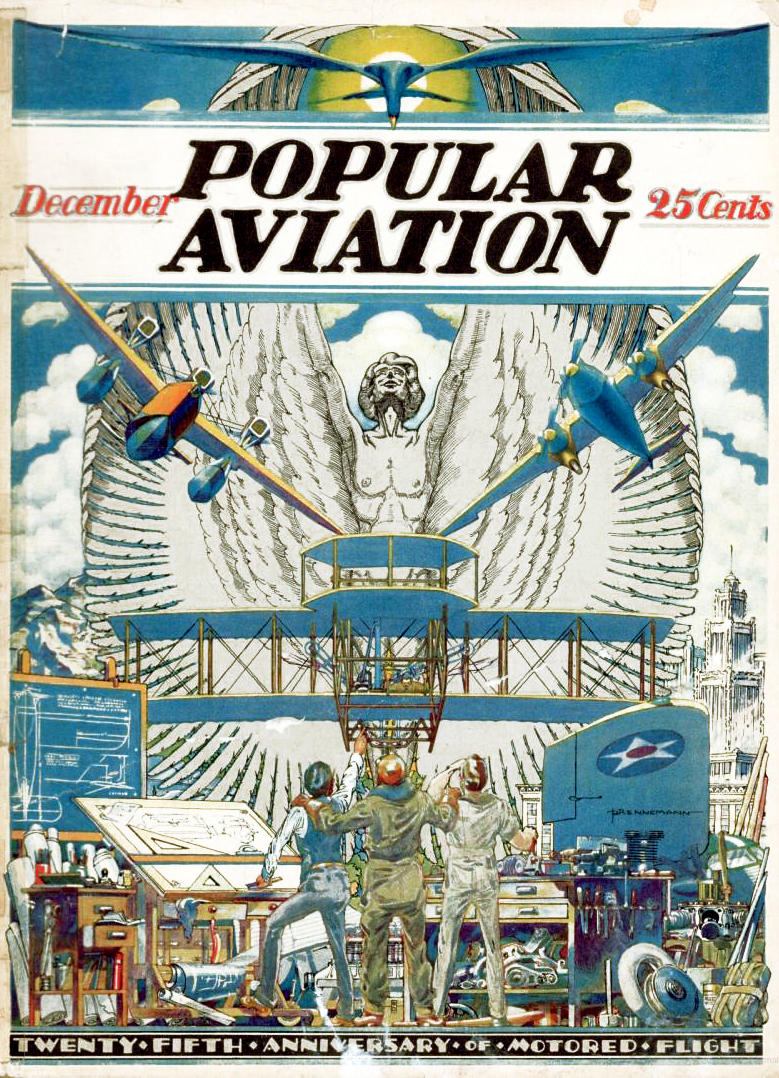
When I came across this amazing magazine cover art on Google Books! YAY! I hope you enjoy reading magazines, and love that these are digital, free, incredibly interesting, and lit by your computer/tablet/laptop monitor for optima viewing!
And it's FULL of cool stuff, like these patents! Here's one from Brunelli!! I was just posting (or adding to old posts) about the Burnelli aircraft!
Since I was looking up Yancey's aircraft, this advertisement led me to this magazine on Google Books..
Working for Buick, engineer Walter Marr's valve-in-head (overhead valve) engine, patent number 771,095, was awarded to Eugene Richard (who replaced Marr at Buick for a time) in the name of Buick in 1904